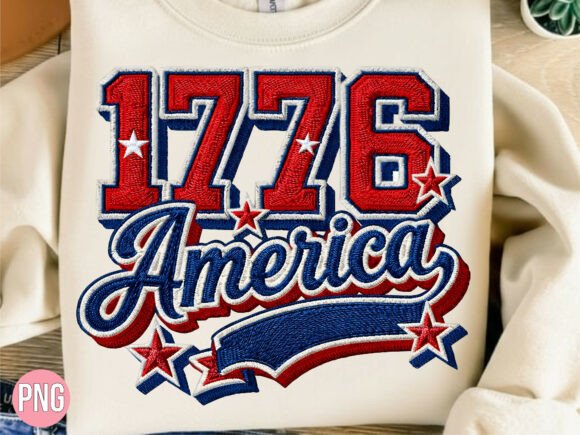
1776 America 3D Embroidery USA PNG
When I open a digital design file for the first time, I’m looking for more than just a pretty image. I need to know whether it will hold up in production, whether it will stitch cleanly on a cap or apron, and whether it will make a small business look professional or amateur. The 1776 America 3D Embroidery USA PNG arrived in a clean ZIP folder, and after extracting the high-resolution 300 DPI PNG, I took a long look at what this design offers for small business merchandise, branded patches, and custom apparel. Let me walk you through my review as an experienced embroidery designer who has tested hundreds of digital files for real-world production.
First Impressions and Visual Personality
The 1776 America 3D Embroidery USA PNG immediately reads as bold, patriotic, and rugged. The 3D embroidery effect gives the lettering and iconography a stitched, dimensional look that mimics actual embroidery thread buildup. This is not a delicate, scripty design. It feels like a statement piece. The visual personality sits somewhere between classic Americana and modern handmade branding. For a small café, a boutique, a florist, a pet brand, or a creative studio that wants to communicate authenticity, craftsmanship, and national pride, this design brings immediate recognition. It feels premium without being fussy, and rustic without looking unfinished.
Because this is a Graphics file in the T-Shirt Designs category, it is primarily a digital artwork for print and mockup use. However, as an embroidery designer, I see strong potential for translating this design into a machine embroidery design for patches, caps, aprons, and tote bags. The 3D shading in the PNG gives me a clear roadmap for thread color placement, stitch direction, and density planning. That is a real advantage when you are building a cohesive set of design assets for a small business.
Performance Across Real Business Merchandise
Let me walk through how the 1776 America 3D Embroidery USA PNG works in the scenarios I encounter every week. Imagine a local café that wants embroidered aprons for baristas, or a handmade soap shop that wants branded totes for customer gifts. This design is strong enough to work as a chest logo on a work shirt, a sleeve accent on a uniform, or a centered mark on a cap front. The patriotic theme fits bakeries, florists, pet brands, and boutique studios that lean into American-made or heritage branding.
For embroidered patches, the design’s bold outlines and clear shapes make it an excellent candidate. Patch production requires clean edges and manageable stitch counts, and this design delivers that clarity. For apron embroidery, the design sits well on a chest panel or lower hem. For cap embroidery, the slightly compact structure of the lettering and motif works on curved surfaces if you size it appropriately. For tote bag design, the 3D effect adds a tactile, handmade feel that customers love in a finished product. Whether you are producing custom apparel for a small business or creating merchandise for an Etsy shop, this file gives you a strong foundation.
I also see this working well for printable mockups. Because the PNG is high resolution at 300 DPI, you can drop it onto a product photo and show a client exactly how the finished embroidery or print will look. That is a huge time saver when you are pitching a design to a café owner or boutique buyer who wants to see the vision before committing to production.
Where to Use This Design Carefully
No design is perfect for every application, and the 1776 America 3D Embroidery USA PNG has a few areas where you need to be intentional. The 3D shading and bold lettering mean that stitch density will be a concern if you digitize this for embroidery. In small sizes, the details could become muddy. I recommend testing the design at a minimum patch size of 2.5 inches wide before committing to production. On cap fronts, the curve of the crown can distort the design if the lettering is too wide, so keep it under 2.25 inches for a clean cap placement.
On dark uniforms, the thread color contrast becomes critical. If you use a dark thread on a dark fabric, the 3D dimension will disappear. I always test the design in black and white first, using a grayscale printout, to see whether the value contrast is strong enough. For fabric texture, rough fabrics like canvas or twill can blur fine details. This design works best on smooth or medium-texture fabrics such as cotton twill, performance polos, or apron-weight canvas.
If you are using the design for small patch sizes on items like bag tags or small labels, reduce the complexity. The 3D shading may need to be simplified into flat stitch areas to keep the embroidery clean. For items that need frequent washing, like aprons or staff uniforms, make sure you use a proper stabilizer behind the embroidery to prevent distortion. I recommend a tear-away or cut-away stabilizer depending on fabric stretch.
How This Design Builds Brand Identity
Brand identity is not just about colors and fonts; it is about how a customer feels when they see your logo. The 1776 America 3D Embroidery USA PNG communicates pride, heritage, and quality craftsmanship. For a small business, that is a powerful message. A bakery that uses this design on staff aprons tells customers that they care about tradition and excellence. A pet brand that adds this design to bandanas or leashes signals durability and American-made values. A florist that stitches this onto tote bags gives clients a keepsake that reinforces trust and recognition.
When you build custom apparel around a cohesive design, every item becomes an advertisement. The embroidery file you create from this PNG can be applied to multiple product types, creating visual consistency across uniforms, merchandise, and packaging. That consistency is what turns a small business into a recognizable brand. The 3D effect adds a premium tactile quality that flat print cannot match. Customers perceive embroidered products as higher value, which allows you to price merchandise accordingly.
For handmade product sellers on Etsy or at craft fairs, this design fits the handmade aesthetic without looking amateur. It feels intentional. It feels like the business owner put thought into their presentation. That builds buyer engagement and encourages repeat purchases. The commercial embroidery potential here is strong, especially if you confirm the licensing terms for the digital file before scaling up production.
Practical Embroidery Designer Notes
I always tell my clients to follow a few steps before ordering production quantities of any new design. Here is my checklist for the 1776 America 3D Embroidery USA PNG:
- Test it in black and white first. Print the design in grayscale and check that the values separate clearly. If the shading blends into the background at a distance, adjust thread colors before digitizing.
- Check if it works at small patch size. Shrink the design to your intended finished size. If the 3D details become too dense or the lettering fills in, increase the size or simplify the artwork.
- Review thread color contrast. Choose thread colors that stand out against your fabric. For dark uniforms, a bright gold, red, or white thread will preserve the 3D effect. For light fabrics, navy or black can work.
- Inspect spacing. Look at the gaps between letters and elements. If the spacing is too tight, the embroidered thread may touch and create a solid blob instead of distinct shapes.
- Confirm hoop size. Make sure the finished design fits within your available hoop dimensions. For cap embroidery, a smaller hoop orientation may be necessary.
- Test on real fabric. Run a sample stitch-out on the exact fabric you plan to use. Fabric texture, stretch, and weight all affect how the design lays.
- Use proper stabilizer. Match the stabilizer to the fabric and stitch density. A dense design needs a firm cut-away stabilizer to prevent puckering over time.
- Create a mockup for client approval. Use the PNG file to generate a photo-realistic mockup on an apron, cap, or tote. Let the client see the design in context before you digitize and stitch.
- Compare it beside other design assets. If the business already has a logo or other branded elements, make sure this design aligns in style, weight, and positioning.
- Confirm commercial licensing. The product description states it is a premium digital design file for creative and print projects. Before you use it for commercial embroidery or merchandise for sale, verify the license terms. Do not assume commercial use is included unless it is explicitly stated.
These steps might seem like extra work, but they save you from costly mistakes. I have seen too many small businesses order bulk apparel only to discover the design does not stitch cleanly. Take the time to test this digital embroidery file concept before you scale up.
Final Thoughts on the Design
The 1776 America 3D Embroidery USA PNG is a versatile, bold, and business-ready design asset. It performs well as a machine embroidery design concept for patches, caps, aprons, and totes. It builds brand identity around pride and craftsmanship. It works for small businesses that want to look professional without losing a handmade, approachable feel. With proper testing and attention to sizing, thread contrast, and stabilizer, this design can become a consistent element across a full line of small business merch and branded merchandise.
Whether you are an Etsy seller, a custom apparel decorator, or a product designer building a cohesive brand, this file gives you a strong starting point. Treat it like a raw material. Shape it, test it, and apply it with intention. That is how you turn a digital design into a finished product that customers trust and remember.