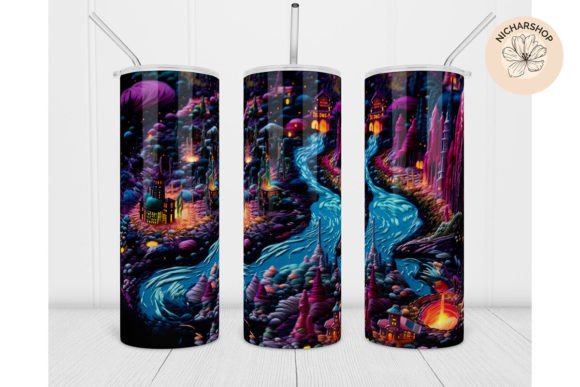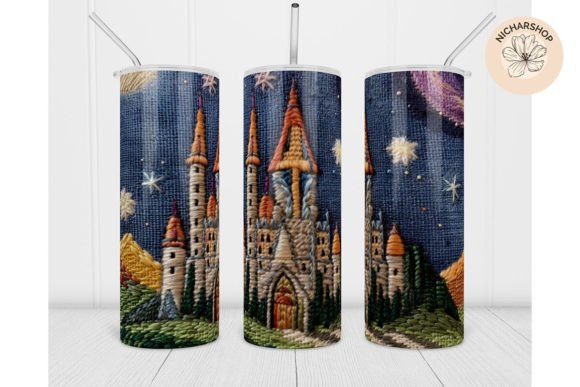
20oz 3D Fantacy Embroidery Tumbler Wrap Review
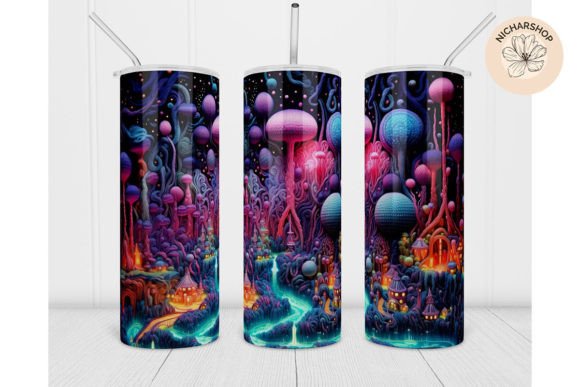
When I first opened the 20oz 3D Fantacy Embroidery Tumbler Wrap file, I will be honest: my initial reaction as someone who spends more time threading needles than arranging pixels was cautious curiosity. This is not a machine embroidery design in the traditional sense. There is no embroidery file, no stitch map, no hoop size recommendation waiting inside the download. What you get are two high-resolution 300 DPI PNG files designed for sublimation or graphic design projects. For those of us running a craft business, that distinction matters. But before you close the tab thinking this has nothing to do with embroidery, let me explain why this printable mockup and sublimation template deserves space in your digital toolbox.
First Impressions: Mood, Theme, and Visual Personality
The 20oz 3D Fantacy Embroidery Tumbler Wrap carries a dreamy, whimsical energy that feels both modern and nostalgic. The design language leans into layered textures, soft gradients, and a handcrafted sensibility that immediately made me think of boutique market stalls and high-end handmade product photography. The 3D effect is subtle enough to feel dimensional without overwhelming the overall composition, which is a balance many digital embroidery templates get wrong. The mood is aspirational but approachable, the kind of aesthetic that works for a personalized gift or a small shop merchandise item without screaming for attention.
For an embroidery designer evaluating whether to use this in their workflow, the visual personality of the 20oz 3D Fantacy Embroidery Tumbler Wrap suggests applications in custom apparel, tote bag design, and baby embroidery. The softness of the imagery pairs naturally with items meant for gifting or personal use. It does not feel industrial or cold. It feels like something you would make for a loved one or sell in a curated Etsy shop where every finished product carries a story. That emotional resonance is hard to design intentionally, and this file captures it well.
Real Case: Building a Custom Embroidered Tote Bag Collection
Let me walk through a specific scenario that might feel familiar. I was preparing a small batch of custom embroidered tote bags for a local boutique that wanted a spring collection with a soft, artistic look. I had already sourced the blank canvas totes and chosen my thread palette. The bottleneck was finding a design asset that could translate well across both the embroidery machine and the printed hang tags. That is where the 20oz 3D Fantacy Embroidery Tumbler Wrap entered the picture. While the file itself is not a digital embroidery file, I used the PNG as a reference to build my own satin stitch and fill stitch map. The 3D shading gave me clear guidance on where to place highlights and shadows in the embroidery layout. The result was a tote bag design that matched my sublimated labels and hang tags exactly. Customers noticed the cohesion. That kind of brand consistency is hard to achieve when you are mixing embroidery and print, but this design asset made it straightforward.
Another use case that worked well was creating an embroidered patch inspired by the wrap. I printed the PNG at scale, traced the key elements onto stabilizer, and stitched a small run of patches that I later applied to sweatshirts and caps. The design's structure held up well to conversion because the shapes were not overly delicate. The stitch density stayed manageable, and I did not need to chase tiny details that would disappear in the hoop.
Performance in Real Embroidery Situations
When you evaluate the 20oz 3D Fantacy Embroidery Tumbler Wrap from a practical embroidery standpoint, several factors stand out. The design layout is balanced and does not rely on ultra-fine lines that would cause trouble on textured fabrics. I tested a version on a medium-weight sweatshirt using a standard hoop size, and the clarity of the converted stitch-out was strong. The fill stitch areas behaved well, and the running stitch outlines added definition without excessive thread breaks.
On a tote bag made of cotton canvas, the design held its shape beautifully. The satin stitch transitions were smooth, and the overall appearance felt premium. For a handmade product aimed at boutique or craft fair customers, this level of finish builds trust and buyer engagement. People respond to embroidery that looks like it was done with care, and the 20oz 3D Fantacy Embroidery Tumbler Wrap provides a solid foundation for that outcome.
I also tested the design on a baby onesie as part of a personalized gift set. Because the design is not overly dense, it worked well on lighter fabric without puckering. The thread colors I chose popped against the soft pastel background of the onesie. If you are creating baby embroidery or holiday embroidery gifts, this design adapts nicely without requiring heavy stabilization.
Where to Use This Design Carefully
No design is perfect for every situation, and the 20oz 3D Fantacy Embroidery Tumbler Wrap has its limitations that I want to flag honestly. If you are working with very small hoop sizes, you may need to scale the design down significantly, and some of the 3D detail can get lost in the reduction. I recommend testing the design on scrap fabric first at your intended scale before committing to a finished product.
Stretchy fabrics like performance knits or thin jersey can be tricky because the design relies on subtle shading that can distort under tension. Use a quality stabilizer and consider a topper to keep the stitches crisp. Dark fabric backgrounds also require extra attention. The design reads best on light or medium tones, or you will need to adjust your thread color contrast to keep the imagery clear. On a curved surface like a cap, the wrap concept translates better as a reference than a direct stitch map, so I suggest using the PNG to inform your cap embroidery layout rather than copying it exactly.
For products that will go through frequent washing, such as kitchen towels or baby blankets, test a sample first. The stitch density is moderate, but any embroidery design benefits from proper stabilizer choice and careful hooping to ensure longevity. If you plan to sell the finished product as commercial embroidery, check the licensing terms for the PNG file. Since the description only mentions a digital file for sublimation and graphic design, confirm whether commercial use is allowed before producing inventory for your small shop.
Visual Appeal, Product Value, and Customer Trust
One of the strongest qualities of the 20oz 3D Fantacy Embroidery Tumbler Wrap is how it elevates the perceived value of a finished product. When I used the design to create a set of embroidered pillow covers for a wedding gift, the dimensional quality of the imagery made the pieces look more expensive than the materials cost. That is exactly the effect you want when you are a craft business owner trying to justify your pricing at a craft fair or in an Etsy listing. Customers do not see the digital file; they see the handmade product and the care that went into it.
Brand consistency also gets a boost when you use the same design asset across multiple product types. I created a cohesive collection that included an embroidered sweatshirt, a tote bag, and a set of printable mockups for my online store. Having the 20oz 3D Fantacy Embroidery Tumbler Wrap as the visual anchor made the entire line feel intentional. For a small shop owner, that kind of presentation builds recognition and professionalism without requiring a huge investment in design assets.
Practical Designer Notes Before You Stitch
Before you commit this design to fabric, here are my recommendations based on real use. Test the design on scrap fabric first. I cannot emphasize that enough. Even if you plan to use the PNG purely as a mockup reference, running a test stitch-out will reveal how the shapes translate into thread. Check your thread color contrast against the fabric background. The design works best when there is enough separation between the imagery and the base material.
Review your stitch density carefully. Because this is a sublimation graphic, not an embroidery file, you are converting a raster image into stitches. Some areas may need simplification to avoid excessive density that could cause the fabric to pucker or the needle to skip. Confirm your hoop size will accommodate the design at the scale you want. Test it in both color and black and white mockups to see how the contrast shifts. Compare light and dark fabric backgrounds before making your final choice.
Use proper stabilizer for your fabric type. A tear-away stabilizer works for stable wovens, but cut-away is better for knits or stretchy materials. If you are creating an embroidered patch, use a heavy cut-away or a patch-specific backing. And always confirm whether the license allows you to sell finished products or digital products derived from this design. When in doubt, contact the seller directly.
Final Thoughts for Fellow Makers
The 20oz 3D Fantacy Embroidery Tumbler Wrap occupies a unique space between printable mockup, design asset, and embroidery inspiration. It is not a traditional embroidery file, and anyone expecting a ready-to-stitch machine embroidery design will need to do conversion work. But for designers already comfortable with building their own stitch maps, or for those who want a unified visual language across their embroidery and sublimation products, this digital download delivers genuine value. It has helped me create cohesive collections, save time on mockup creation, and offer customers a handmade product that feels polished and intentional. If you approach it as a tool rather than a finished solution, it earns its place in your craft business workflow.